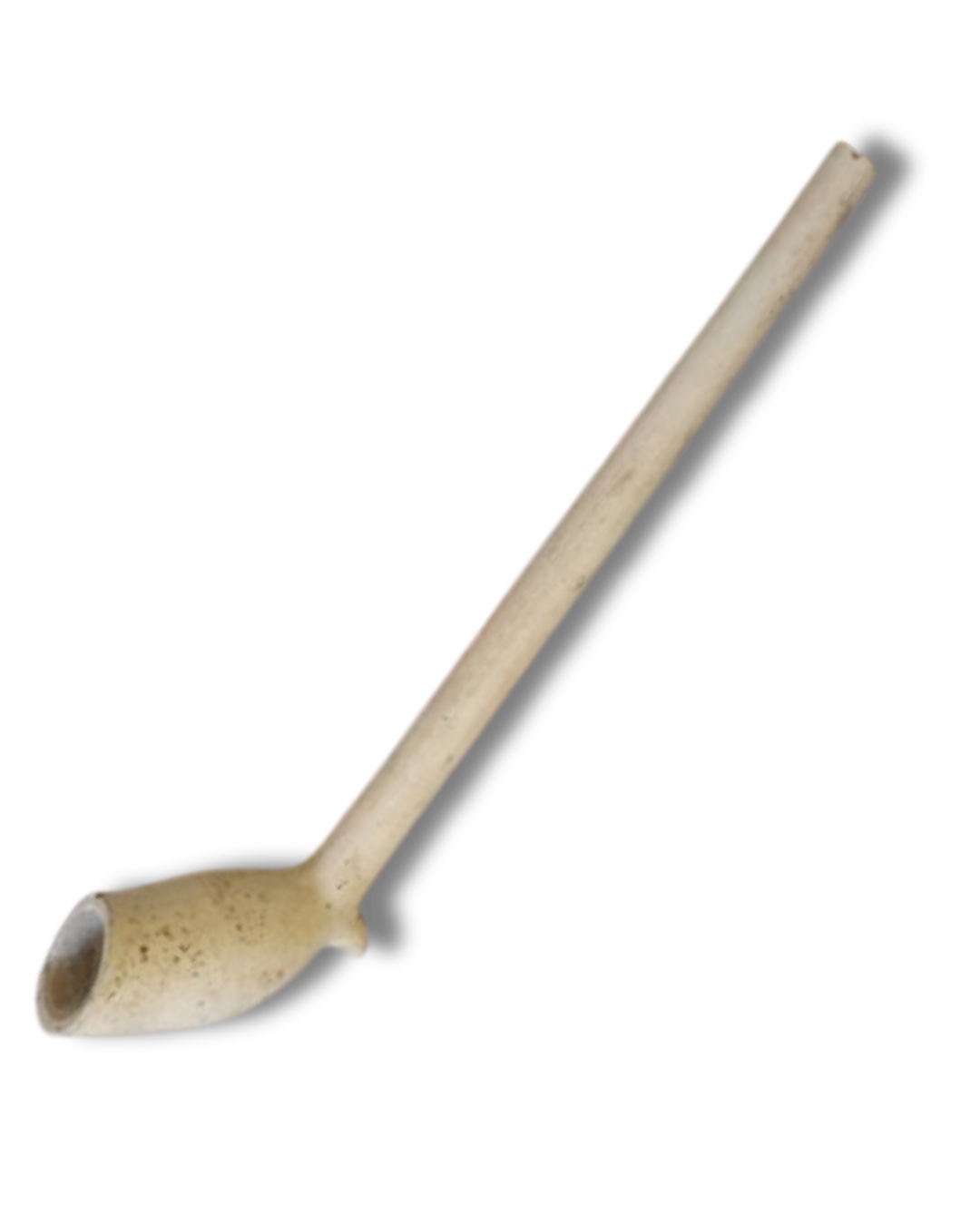
An item found in the redevelopment of Skinners’ Hall
Clay pipes were a common sight in 17th Century England, used primarily for smoking tobacco, which had become increasingly popular following its introduction from the New World.
These fragile, disposable pipes were often short-lived, but their widespread use makes them a frequent find in archaeological digs.
Typically made from white ball clay, these pipes featured a small bowl and a long, slender stem which could extend over a foot in length. The size of the bowl evolved over time, growing larger as tobacco became more affordable.
Some were plain, while others bore decorative elements or maker’s marks, offering insight into the trade and manufacturing of the period.
In the 17th Century, broken clay pipe stems were sometimes repurposed as writing implements or even used as drinking straws!
Interested in exploring more artefacts?
Scan the QR codes around the Dowgate Range or select an artefact below to explore its history.
This artefact is a small glimpse into the past, but the story of The Skinners’ Company stretches back centuries. From its medieval origins in the fur trade to its lasting impact on education and philanthropy, the Company has played a vital role in shaping London’s history.
Discover the rich heritage, traditions, and milestones that define The Skinners’ Company today.